We follow the Little Wandle Phonics scheme along side Collins Big Cat phonics books for home reading.
Nursery
Our Nursery children begin building the Foundations to Phonics by engaging in nursery rhyme activities, phonological awareness and oral blending games. Our Nursery children play games and learn phonics in a fun and engaging way to prepare them for Phase 2 in Reception.
Reception
Children make a strong start in Reception: teaching begins in Week 2 of the Autumn term. We follow the Little Wandle Letters and Sounds Revised expectations of progress. Four new phonemes and their corresponding graphemes are taught (GPCs) each week, and they are then used in the final lesson of the week to review the week’s learning. Children will also learn tricky words during these sessions. In the Autumn and Spring term, Reception learn phase 2 and phase 3 GPCs and then will spend the final term learning phase 4.
Year 2
We begin by using assessment to ensure that children have completed the Little Wandle Year 1 progression. Any gaps in teaching are addressed through daily phonics lessons until the programme is completed. Corresponding summative assessments are carried out to ensure this content is secure. Once all Year 1 content has been taught and assessed, we teach a five-week Phase 5 review. This ensures that children secure the trickier elements of Phase 5 and can apply this alphabetic knowledge in both reading and spelling. We use the Phase 5 review assessment before teaching in Year 2 to identify any children who may need more support when teaching. We reassess after teaching the Phase 5 review. Once the Phase 5 review is secure, we teach the Bridge to spelling before moving to the Spelling units. Children with larger gaps in their phonic knowledge than their peers have daily phonics teaching and follow the Rapid Catch-up programme.
Half termly assessments take place through Reception and Year 1 to help inform future teaching and help identify children who have gaps in their phonic knowledge and need additional practice. Daily assessment of learning also takes place within the classroom, so staff can quickly identify any children who are in danger of falling behind and provide the appropriate daily ‘Keep Up’ intervention.
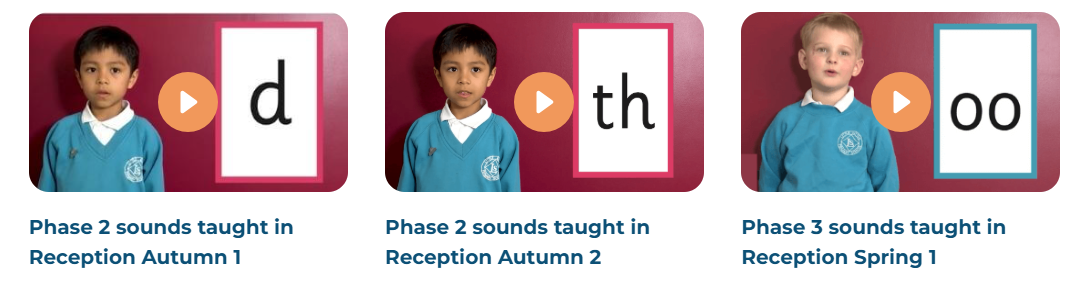
For support with the pronunciation of the phonemes taught, please refer to the videos below.